GEO Tools for SaaS Teams: What to Evaluate Before You Buy
A practical evaluation guide for SaaS teams comparing GEO, AI visibility, and answer-engine optimization tools.
Last updated
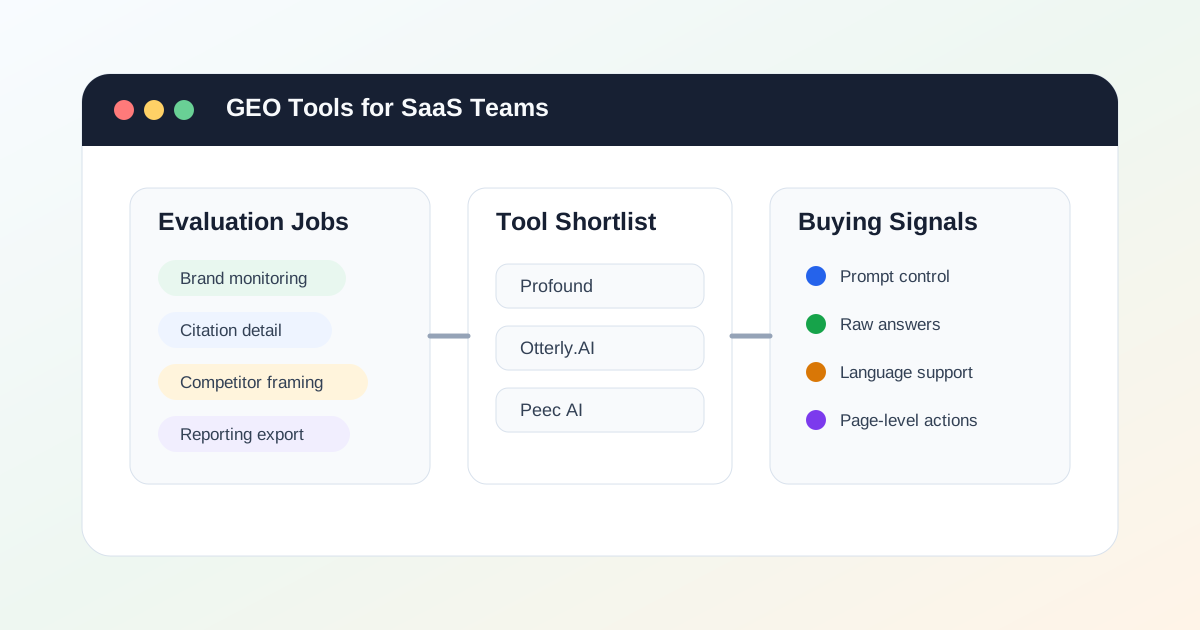
GEO tools are becoming a new category for SaaS teams that care about AI search visibility. They promise to show whether a brand appears in ChatGPT, Perplexity, Gemini, Copilot, AI Overviews, or other answer surfaces. Some tools track citations. Some compare competitors. Some recommend content improvements.
The category is useful, but still early. A SaaS team should not buy the tool with the best dashboard. It should buy the tool that matches the team's actual visibility problem.
Start with the job
Before comparing vendors, name the job.
| Job | What the team needs |
|---|---|
| Brand monitoring | Track whether the company appears in AI answers |
| Citation monitoring | See which URLs are cited as sources |
| Competitive visibility | Compare brand presence against alternatives |
| Category education | Find prompts where the category is misunderstood |
| Content improvement | Identify pages that need definitions, sources, FAQ, or comparison tables |
| Reporting | Export evidence for stakeholders or clients |
A tool that is excellent for enterprise brand monitoring may be too heavy for a small SaaS content team. A lightweight tool may be enough if the team only needs monthly prompt snapshots.
Evaluation criteria
Use these criteria before buying.
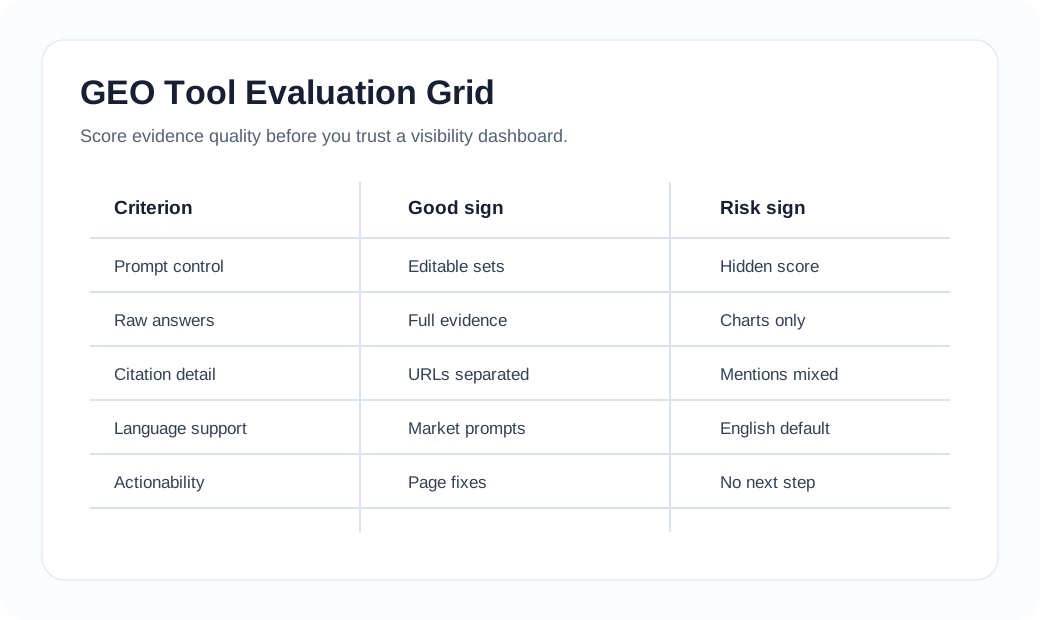
| Criterion | Good sign | Risk sign |
|---|---|---|
| Prompt control | You can add, edit, group, and export prompts | The tool hides prompts behind a score |
| Raw answer access | You can inspect full answers and citations | Only charts are shown |
| Engine coverage | It names the exact answer surfaces tested | It says "AI search" vaguely |
| Citation detail | It separates mentions from cited pages | Mentions and citations are blended |
| Competitor setup | You can define competitors by product, category, and market | Competitors are inferred without context |
| Language support | Local-language prompts are preserved | English is treated as the default for every market |
| History | Snapshots can be compared over time | Reports are one-off |
| Actionability | It recommends page-level fixes | It reports visibility without next steps |
The best tools make the evidence inspectable. If the team cannot see the prompt and raw answer, it cannot learn why the score changed.
SaaS-specific questions
SaaS teams should ask vendor questions that match buying journeys.
- Can we test "best tool for X" and "alternative to Y" prompts?
- Can we compare by product category, not only by brand name?
- Can the report show which competitor is described as easiest, cheapest, most secure, or most enterprise-ready?
- Can we track documentation pages, comparison pages, and blog posts separately?
- Can the tool handle multiple regions and languages?
- Can we export raw evidence for sales, product marketing, and content teams?
The useful output is not just "share of voice." It is a prioritized list of pages, categories, and claims to improve.
Tools to watch
This market changes quickly. Treat the following as a research shortlist, not a final ranking.
| Tool | Likely fit | What to verify |
|---|---|---|
| Profound | Larger teams tracking enterprise AI visibility | Pricing, supported engines, reporting depth, and data exports |
| Otterly.AI | Brand and AI search monitoring workflows | Prompt control, raw answer access, and citation detail |
| Peec AI | Competitive AI visibility tracking | Country support, competitor setup, historical snapshots |
| Manual spreadsheet | Early-stage SaaS teams | Repeatability, time cost, and learning value |
The manual spreadsheet is still part of the stack. It helps the team define what the paid tool should measure.
What to avoid
Avoid buying when:
- nobody has defined the prompt set
- the team does not know which competitors matter
- local-language markets are important but unsupported
- the dashboard does not expose raw answers
- the vendor cannot distinguish brand mentions from source citations
- the report does not lead to content or product-page actions
GEO tools can create new visibility workflows, but they cannot replace positioning. If the public web does not explain what the product does, the tool can only reveal the gap.
A practical buying sequence
- Run a manual AI visibility audit.
- Group prompts by category, competitor, use case, and market.
- Test two or three tools with the same prompt set.
- Compare raw answers, citations, exports, and action recommendations.
- Pick one monthly reporting format.
- Assign owners for page updates.
The best outcome is a repeatable loop: measure, diagnose, update pages, and re-check.