AI Visibility Audit Workflow: A Manual Process Before You Buy Tools
A practical manual workflow for checking whether a brand, product, or page appears in AI answers before investing in AI search monitoring tools.
Last updated
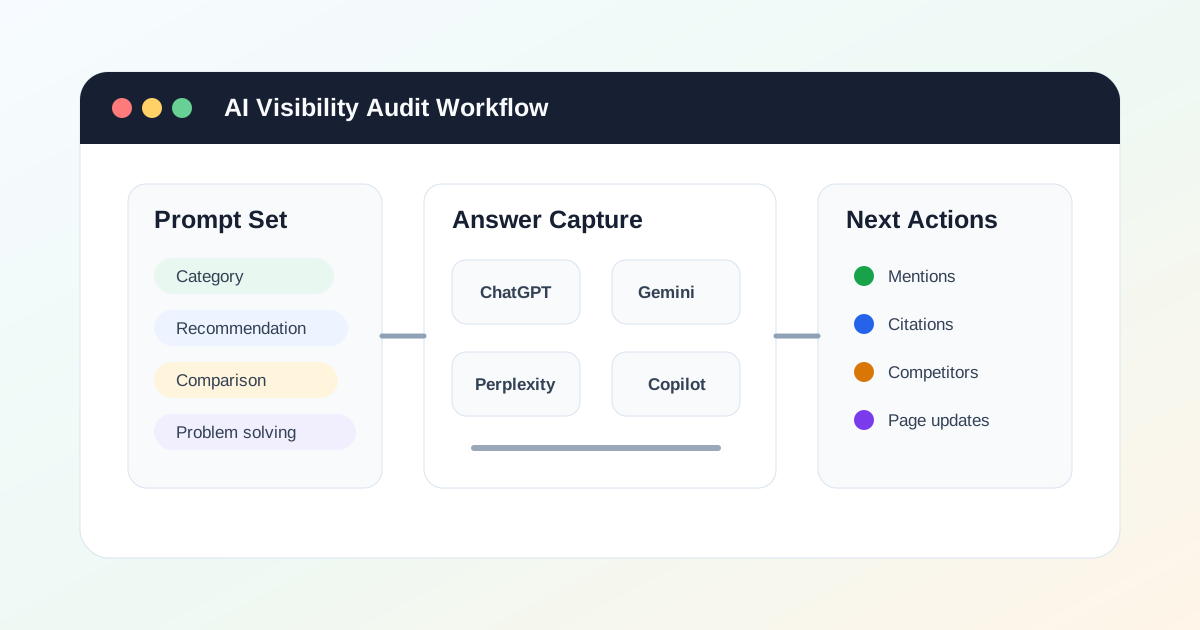
An AI visibility audit is a practical baseline. It checks whether a brand, product, article, or category appears inside AI-generated answers before a team invests in dashboards, consultants, or a large content refresh.
The mistake is treating AI visibility as a single score. A useful audit separates mentions, citations, competitor framing, answer accuracy, and source quality. Those signals point to different actions. A missing mention may require clearer entity pages. A missing citation may require stronger source pages. A bad description may require better product positioning across the web.
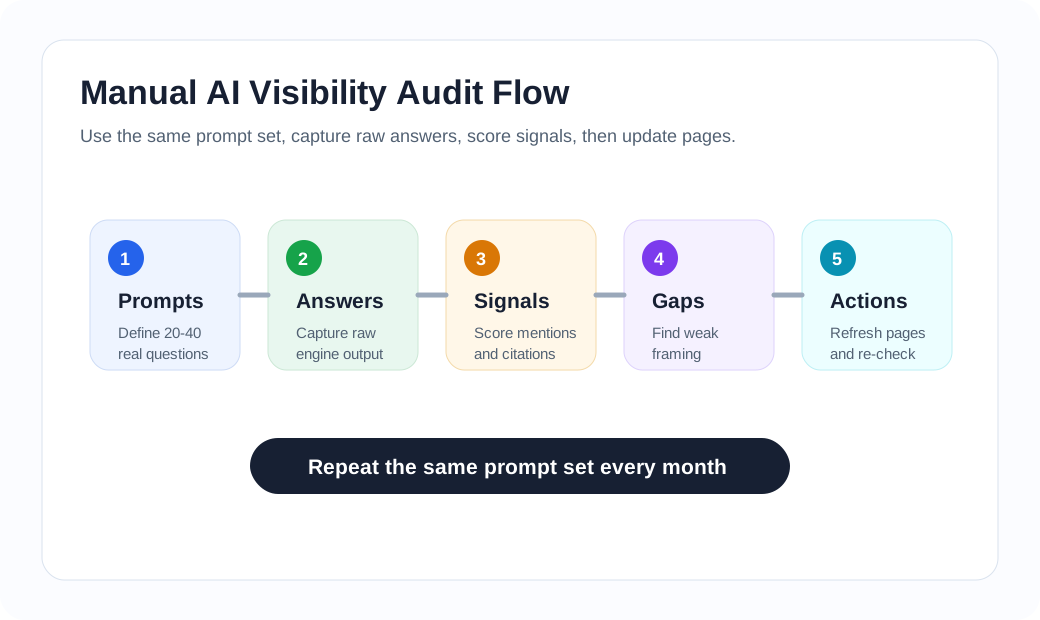
Start with the question set
The audit begins with prompts, not tools. Pick 20 to 40 questions that real buyers, readers, or users might ask.
Use four prompt groups:
| Prompt group | Example | What it reveals |
|---|---|---|
| Category definition | "What are AI search monitoring tools?" | Whether the category language is clear |
| Recommendation | "Best tools to monitor brand visibility in ChatGPT" | Which competitors appear in buying journeys |
| Problem solving | "How do I know if my SaaS appears in AI answers?" | Whether your educational content is useful |
| Comparison | "GEO vs SEO for small B2B teams" | Whether adjacent concepts are understood correctly |
Do not change the prompt set every time. The goal is to create a baseline that can be repeated.
Run the same prompts across answer engines
Test at least three answer surfaces. For most teams, the first pass should include ChatGPT, Perplexity, Gemini, and one surface relevant to the audience, such as Copilot for B2B workflows or Claude for developer and research-heavy audiences.
Record:
- exact prompt
- date checked
- answer engine
- language and market
- brand mentions
- cited URLs
- competitor names
- answer framing
- raw answer text
The raw answer matters. A dashboard score is useful later, but the first audit should teach the team how answers are actually formed.
Score what happened
Use a simple scoring model.
| Signal | Score | Meaning |
|---|---|---|
| Brand absent | 0 | The answer does not mention you |
| Brand mentioned | 1 | You appear, but no page is cited |
| Page cited | 2 | A relevant source from your site is shown |
| Strong framing | +1 | The description is accurate and useful |
| Weak framing | -1 | The answer misstates category, audience, or value |
This is not a universal metric. It is a way to make the next action visible.
Map each gap to a content action
The audit should not end with a report. Each weak signal needs an action.
| Finding | Likely content action |
|---|---|
| Brand never appears | Create clearer entity, category, and comparison pages |
| Competitors appear but you do not | Publish pages around the buying criteria where competitors are being recommended |
| Your page is not cited | Improve citation readiness with sources, definitions, tables, FAQ, and update logs |
| The answer describes you incorrectly | Rewrite product/category language across key pages |
| Only English prompts work | Add local-language examples, FAQ, and market-specific pages |
Google's guidance around AI features still points back to useful, accessible, indexable content. The audit simply shows which pages need to become more useful for answer journeys.
When to buy software
Buy software after the first manual baseline, not before it. A tool is useful when the team already knows:
- which prompt sets matter
- which markets and languages need tracking
- which competitors should be compared
- whether raw answers and citations must be exported
- who will act on the report
Without that context, a monitoring tool can create a polished chart and still fail to answer the operational question: what should we improve this month?
A lightweight monthly workflow
- Refresh the same 20 to 40 prompts.
- Record mentions, citations, competitors, and raw answers.
- Sort gaps by business value.
- Pick two pages to improve.
- Update definitions, sources, tables, FAQ, and internal links.
- Re-run the affected prompts two weeks later.
This turns AI visibility into a content improvement loop rather than a one-time report.
Related reading
- LLM Visibility: How Brands Are Found Inside AI Answers
- AI Search Visibility for Content Sites: Diagnose Missing AI Citations
- AI Answer Citation Checklist: What Makes a Page More Likely to Be Cited
- AI Search Monitoring Tools: What to Track Before Buying One
- GEO Tools for SaaS Teams: What to Evaluate Before You Buy